

The business entity of the Humpuss Intermoda Group, namely PT Humpuss Maritim Internasional (HUMI) is a company engaged in the infrastructure and energy distribution sector as well as the port ecosystem in Indonesia.
The business sector run by HUMI is reflected in a series of business segments and business chains currently operated by the Company through its various subsidiaries. Until now, HUMI is known to run as many as eight business segments.
To clarify the business landscape operated by HUMI, the following is a sequence of value chains from all business segments run by HUMI and its subsidiaries.
https://www.instagram.com/p/Ci9tosrpj1t/
1. Services
The Company obtained a cooperation contract which includes vessel charter services for the transportation of energy commodities such as liquefied natural gas (LNG), oil or petrochemicals.
The LNG transportation service presented by HUMI is run directly by its subsidiary, PT GTS Internasional Tbk (GTSI). Meanwhile, oil and petrochemical transportation services are run through its subsidiary PT PCS International (PCSI).
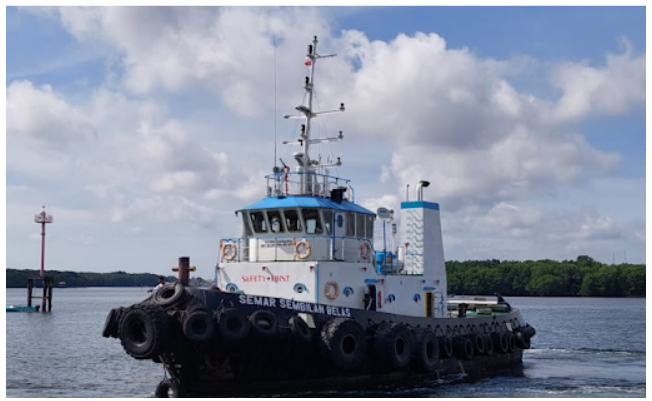
In addition to obtaining a rental contract for the delivery of LNG, oil or petrochemicals, the Company also obtains a service contract or rental of vessels supporting port or offshore activities, the fleet of vessels operated, including tug boats, barges, and dredger vessels.
Not only presenting business segments that are operational in water, HUMI also develops business potential in the maritime industry by providing training or marine services to produce reliable and quality crew members.
In presenting the latest maritime education facilities, HUMI through PT ETSI Hutama Maritim (ETSI) cooperates with Trilogy University Jakarta to establish a marine and training center called Humpuss Trilogy Maritime Training Center or HTMTC, centered on the 4th floor of Trilogy University Building, Kalibata, South Jakarta.
2. Production/Seller Terminal
In energy distribution services, the company’s ships will carry out loading or inter-energy loading at the loading terminal after obtaining an energy transportation cooperation contract with customers.
3. Shipping
Vessels that have a contract to make deliveries and have carried out the loading process are ready to continue the phase in the next HUMI business value chain by making deliveries from one place to another according to the agreement stated in the cooperation contract.
The energy delivery process involves a number of reliable and professional crew members to ensure shipping activities can run safely, well and smoothly. Meanwhile, the quality crews who operate the entire fleet of vessels belonging to HUMI are presented through MCSI which has been certified and has recognized competence by the competent authority.
MCSI has the responsibility to provide and manage qualified maritime personnel. To provide reliable maritime personnel, MCSI has a special training and marine center that focuses on producing maritime personnel, the Humpuss Trilogy Maritime Training Center (HTMTC).
HTMTC is a maritime center presented by MCSI for the collaboration between its subsidiary PT ETSI Hutama Maritim and the Trilogy University educational institution.
4. Buyer Terminal
After the ship sails and arrives at its destination, the ship transfers the energy cargo that is delivered by transferring the cargo to the buyer’s storage tank. The owned tank consists of two types, namely the onshore tank (onshore) or the floating tank (offshore).
5. Regasification
If the delivered cargo is LNG, then the energy material will enter the next stage, namely regasification. For information, regasification is a process of returning natural gas from a liquid form to a gas.
After regasification, the natural gas is ready to be channeled directly to a private power generation company (Independent Power Producer/IPP) or other energy users.
6. IPP & Industry
After being regasified, the natural gas is distributed by flowing it through gas pipelines for direct use by HUMI’s customers. Meanwhile, customers who use the Company’s natural gas transportation services currently consist of IPP, or other industries or manufactures that require it.
For information, natural gas transported by HUMI through its subsidiary GTSI plays an important role in the supply of raw materials for government and private power plants (IPP) which are responsible for lighting almost two thirds of Indonesia’s territory.