

Indonesia is known as the largest maritime country in the world. This is reflected in the geographical conditions, where the majority or 62% consists of water. No wonder Indonesia has more diverse marine biodiversity than other countries.
Indonesia’s marine biodiversity and various beautiful seabed topography are of course directly proportional to maritime natural resources that hold great potential for economic value that can be utilized by all Indonesian people.
According to Deputy Chairperson of the Indonesian Chamber of Commerce and Industry (Kadin) for Maritime Affairs and Fisheries Yugi Prayanto, Indonesia’s rich maritime diversity has the potential to bring economic potential of up to US$1.5 trillion per year.
Even so, Yugi believes that the potential for this fantastic economic value is still minimally utilized by all business actors in the maritime sector. “‘However, up to now, only 25 percent of the maritime economic potential has been utilized,”‘ explained Yugi in the webinar of the Indonesian Economics Scholars Association (ISEI) with the theme “‘Revitalization of Maritime Economic Policy in Supporting the Quality of Economic Recovery”‘. Source
Yudi explained further about the maritime economy he meant. According to him, the maritime economy is all activities that are able to bring economic value that take place in the coastal and marine areas of Indonesia.
Meanwhile, the Board of Trustees of the Association of Indonesian Archipelago and Sand Governments (Aspeksindo) Zainal A Paliwang said the potential generated through the maritime economy includes 11 sectors. “‘The marine economic sector accompanies as many as 127 million Indonesian people on the coast,”‘ said Zainal, who is also the Governor of North Kalimantan.
The 11 sectors include capture fisheries, aquaculture, fishery product processing industry, marine biotechnology industry, mining and energy, marine tourism, forestry, sea transportation, small island resources, maritime service industry, and unconventional natural resources.
PT Humpuss Maritim Internasional (HUMI), a subsidiary of the Humpuss Intermoda Group which runs the energy distribution and infrastructure business and the port ecosystem also plays an important role in one of the maritime economic sectors, namely mining and energy.
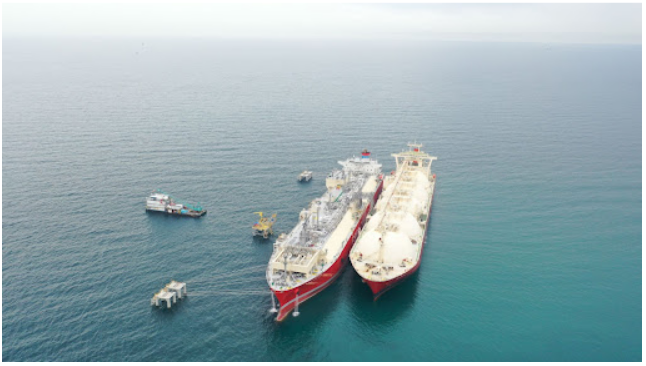
The importance of HUMI’s role in supporting the mining and energy sectors in the maritime economy, for example, is reflected by the involvement of the Company through PT GTS Internasional Tbk (GTSI) in transporting energy commodities in the form of liquefied natural gas to a number of gas and steam power plants (PLTGU) in Indonesia.
Not only that, through its subsidiary PT PCS International, HUMI also provides oil and petrochemical transportation services through its fleet of tankers to ensure the country’s energy needs are met.